
4-7-8 BREATHING TECHNIQUE · BREATHING SKILL · SELF-REGULATION
When panic starts to build, a familiar coping skill can provide direction.
Sometimes the way we feel changes within moments. Our heart beats faster, thoughts race, and the body goes into a state of alarm. During intense tension or emerging panic, it can be difficult to focus on anything other than the distressing sensations.
In situations like these, strategies we have practised beforehand can help. They give us a familiar action to focus on when clear thinking feels difficult.
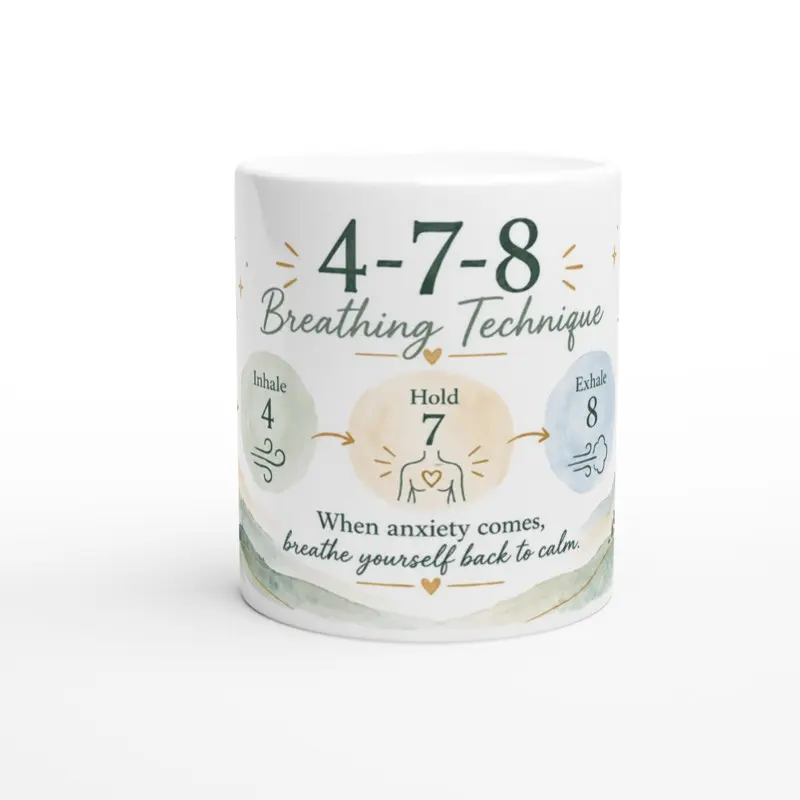
The 4-7-8 Breathing Technique Mug makes one such breathing exercise easy to see. It shows each step in a simple rhythm and can remind you to use a self-regulation strategy that suits you.
What is a coping skill, and why can it matter during panic?
Coping skills are specific abilities or actions that can help people manage distressing feelings, intense tension, or difficult situations. They can include grounding exercises, particular movements, or breathing techniques.
A coping skill does not have to remove every unpleasant feeling. Its value may simply lie in having a familiar action available, redirecting your attention, and responding more consciously to what you are experiencing.
When panic begins to build, it can help not to have to search for an exercise first. That is why the instructions on this mug are deliberately simple. However, they do not replace practising the technique in advance or seeking support suited to your individual needs.
THE BREATHING TECHNIQUE ON YOUR MUG
4 – 7 – 8: A breathing rhythm in three steps
The 4-7-8 technique follows a set sequence for breathing in, holding your breath, and breathing out. It is best to try the exercise for the first time in a calm setting, while sitting comfortably.
STEP 1 · BREATHE IN
4 seconds
Breathe in gently through your nose. Try not to force the breath. Instead, let the air flow in evenly.
STEP 2 · HOLD
7 seconds
Hold your breath gently, but only if it feels comfortable. This stage may feel unpleasant, especially during panic or when you feel short of breath. Skip the breath-holding stage if it makes your symptoms worse.
STEP 3 · BREATHE OUT
8 seconds
Breathe out slowly and as evenly as possible through your mouth. Here, too, breathing should not feel strained or forced.
Important: The numbers describe the original exercise, but they are not a requirement. Stop if you feel dizzy, short of breath, or increasingly distressed. Calm, natural breathing may then be more suitable than following a fixed rhythm.
Why it is best to practise a coping skill in advance
During a panic attack, understanding new instructions or trying an unfamiliar routine can be especially difficult. It may therefore help to become familiar with breathing exercises when you feel calm and safe.
By trying the technique repeatedly, you can better judge whether it feels helpful, which breathing stages are comfortable, and when another strategy might work better for you.
It is not about performing the exercise perfectly. What matters is finding a way to manage your own tension that feels safe and helpful to you. Not every breathing technique suits every person or every situation.
THE MESSAGE ON YOUR MUG
“When panic comes, breathe your way back to calm.”
These words are meant to encourage you to recognise the ways you can respond to intense tension. They are not a promise that the 4-7-8 technique can end a panic attack.
Sometimes a breathing exercise can help. At other times, another strategy you have already learned, support from someone you trust, or professional help may be needed. You do not have to force yourself to use a technique just because it helps someone else.
Why put a breathing technique on a mug?
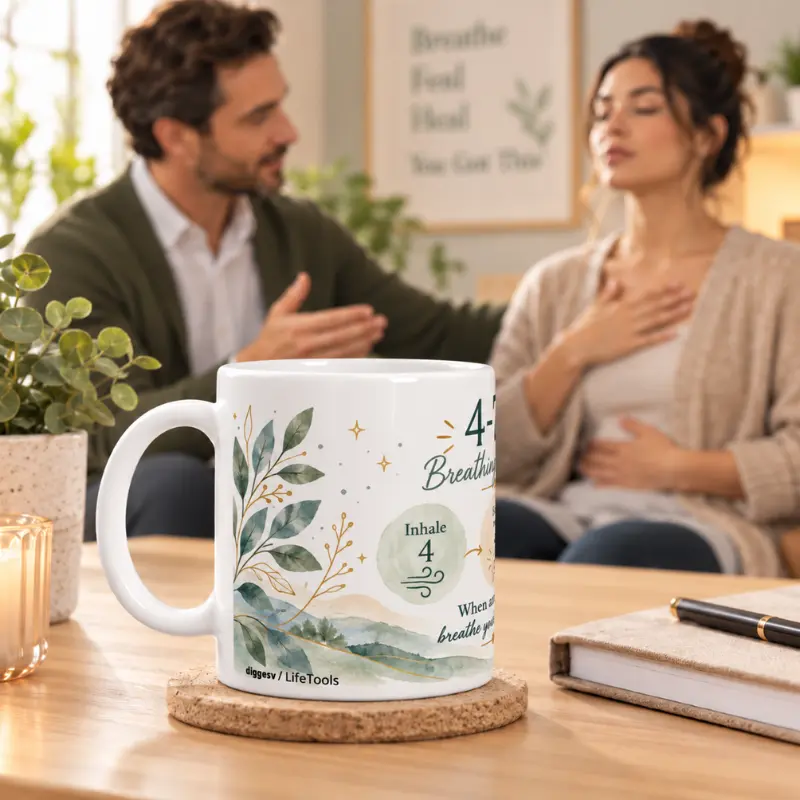
Instructions are not always close at hand during distressing moments. The 4-7-8 Breathing Technique Mug therefore combines an everyday object with a clear, permanently visible step-by-step guide.
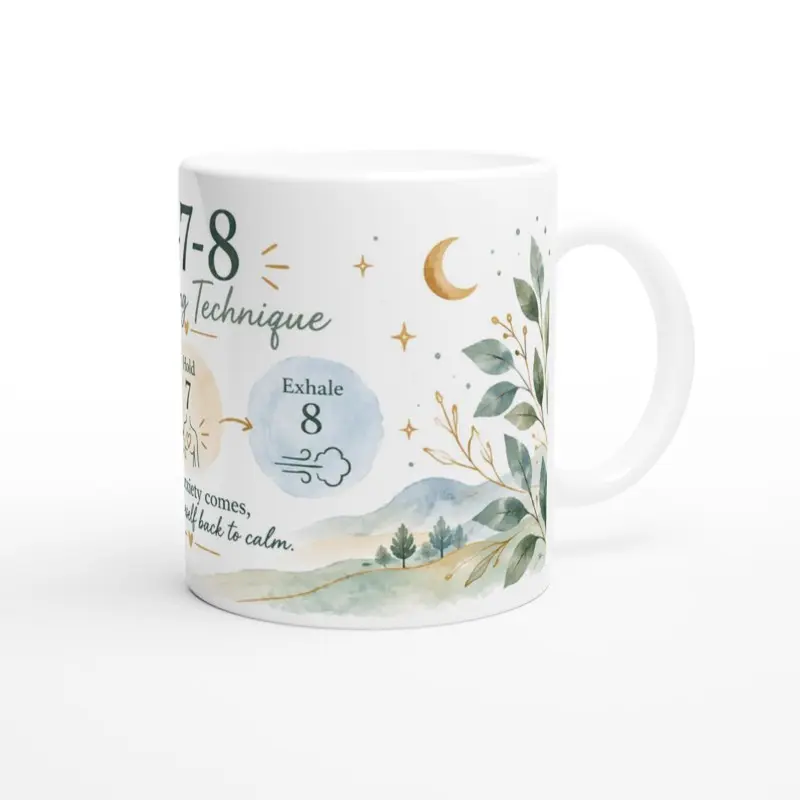
The three colour-coded breathing stages—breathing in, holding, and breathing out—are easy to recognise at a glance. The botanical watercolour design frames the instructions in soft, natural colours without distracting from the steps themselves.
In this way, the mug can serve as a visible reminder of a breathing skill you have already learned in everyday life. This can be especially useful when you want to remind yourself of the ways you have learned to cope with inner tension.
YOUR PERSONAL APPROACH TO TENSION
Which strategy helps you when tension rises?
You may already have noticed that some breathing exercises feel comfortable while others make you more uneasy. Perhaps movement, looking consciously at your surroundings, contacting someone you trust, or using another coping skill works better for you.
Noticing these differences matters. A helpful strategy does not have to look the same for everyone. The 4-7-8 technique is one option among several, and whether you use it should depend on how you feel.
A practical companion, also suitable as a gift
This mug combines a thoughtfully designed illustration with practical breathing instructions. It is particularly suited to people interested in breathing skills, managing tension, and developing personal coping strategies.
It can also be a thoughtful gift—not with the expectation that a mug will solve difficult situations, but as a reminder of a practical skill someone can explore at their own pace.
Product details
- Ceramic mug with an 11 oz capacity (approx. 330 mL)
- Wraparound 4-7-8 breathing technique design
- Easy-to-read instructions showing three breathing stages
- Soft watercolour tones and botanical illustrations
- Microwave safe
- Dishwasher safe
- Everyday object with a visible reminder of a breathing skill
A THOUGHT TO TAKE WITH YOU
You are allowed to learn what helps you in difficult moments.
Panic and intense tension can feel overwhelming. That makes it all the more valuable to explore coping strategies, practise them, and discover which ones suit you.
Not every exercise helps every time. But you are allowed to develop your own way of coping.
Note: The 4-7-8 breathing technique may be a supportive self-regulation exercise for some people, but it is not an established treatment for panic attacks. Holding your breath for longer periods may feel uncomfortable, particularly during panic, dizziness, or shortness of breath. Breathing exercises do not replace medical or psychotherapeutic treatment. Professional assessment is important for severe, recurring, or unexplained symptoms.
LifeTools was developed by DigGesV – Digitale Gesundheitsverbindungen to support self-reflection, practical coping strategies, and a more conscious approach to psychological distress in everyday life.
Rezensionen
Es gibt noch keine Rezensionen.